
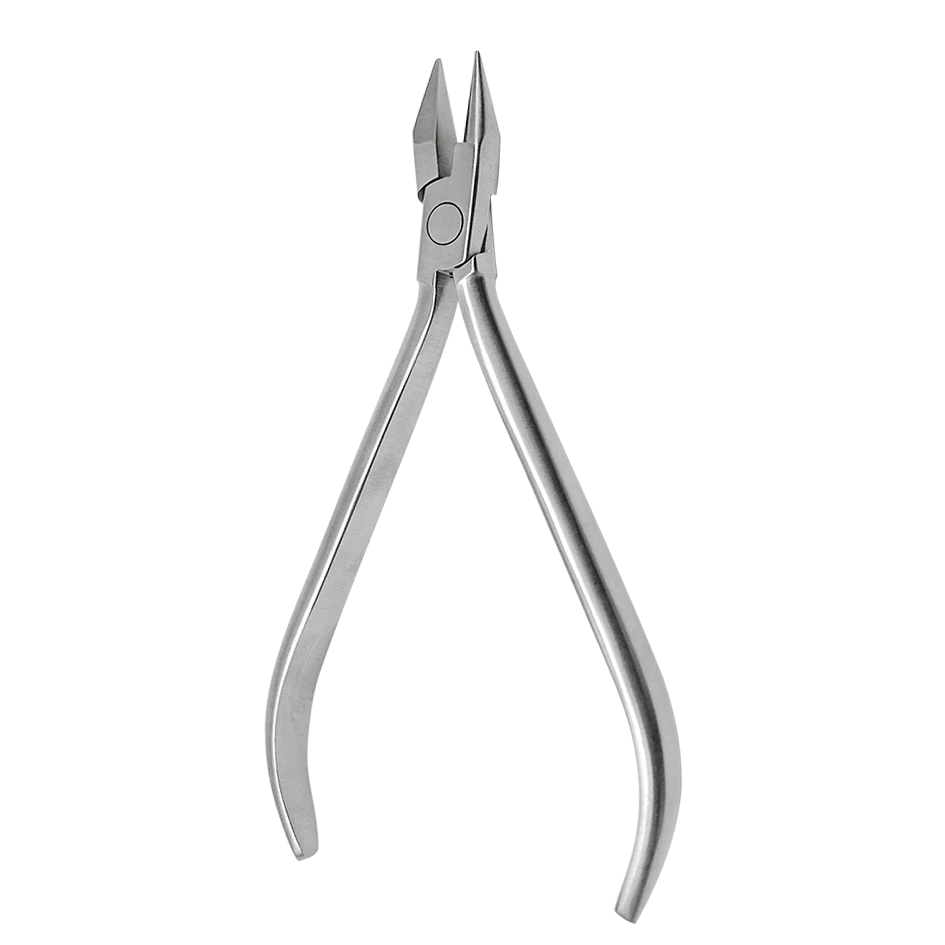
Orthodontic Instruments
EKSEN TECHNOLOGY (HK) LIMITED · source
Orthodontic Instruments
Your Professional Orthodontic Instruments Manufacturer!
Despite being a young company, we have rapidly established ourselves as a trusted name in both orthodontics and endodontics. Our dedication to excellence and continuous improvement has earned us a growing client base worldwide. The company's main products include orthodontic brackets, orthodontic buccal tubes, orthodontic wires, orthodontic elastomerics, orthodontic instruments, etc.
Types of Orthodontic Instruments
The Orthodontic Instruments Produced By Our Company are Mainly of the Following Types:
Light wire plier
A Light Wire Plier is a specialized orthodontic tool designed for making intricate bends and small loops on light-diameter wires, typically used in dental braces and orthodontic appliances. These pliers feature a long, tapered beak with grooves to grip and shape light wires (often up to .020 inches) with precision, allowing for delicate adjustments to orthodontic archwires and the creation of specific wire forms.
Torque bending plier
A torque bending plier is an orthodontic instrument used to apply torque, or rotational force, to an archwire, particularly square and rectangular ones. It works by precisely twisting the wire at a specific point, often with the use of a male and female plier set or a key that fits into the plier's design. This controlled bending allows for the accurate adjustment of tooth position by angling the tooth's root.
Benefits of Orthodontic Instruments
Light wire plier
• Ergonomic design - Light wire pliers are typically compact and lightweight, making them easy to maneuver in tight spaces and reducing hand fatigue during prolonged use. Their balanced weight distribution enhances control, especially when working on delicate wiring or intricate circuits.
• Precision jaws and cutting edges - The jaws are engineered to provide a firm grip on wires without crushing insulation, while the cutting edges are precisely aligned to deliver clean, burr-free cuts. This is particularly important in electronics and telecommunications, where frayed wires can compromise connections.
• Heat treatment for longevity - Advanced manufacturing techniques apply localized heat treatment to the cutting edges only, preserving flexibility in the joint areas. This dual-hardness approach extends tool life and maintains sharpness over hundreds of cutting cycles.
Torque bending plier
• Accuracy and precision - High-precision torque-bending pliers enable dentists to create consistent, accurate wire twists and bends, ensuring optimal archwire configuration. This level of control results in better-fitting dental appliances that align teeth more effectively and reduce the need for frequent adjustments during follow-up visits.
• Durability and long-term cost efficiency - Professional-grade torque-bending pliers are typically constructed from medical-grade stainless steel and often feature chrome or anti-corrosive coatings, making them resistant to rust, wear, and chemical exposure from sterilization processes. These materials also ensure biocompatibility and resistance to interactions with common orthodontic alloys like nickel-titanium and cobalt-chrome.
• Ergonomic design for enhanced performance - Modern torque-bending pliers are engineered with ergonomically shaped handles that reduce hand fatigue, minimize strain on fingers and wrists, and improve grip stability—even during prolonged use. This design supports precision and reduces the risk of slips or dropped instruments during delicate procedures.
• Versatility across orthodontic applications - One of the most valuable commercial features of torque-bending pliers is their ability to handle a wide range of orthodontic wire types, including stainless steel, nickel-titanium (NiTi), and cobalt-chromium alloys. This versatility eliminates the need for multiple specialized tools, streamlining instrument inventory and reducing clutter in the operatory.
Precautions for Use of Orthodontic Instruments
Light wire plier
• Select the right tool: Match the plier type to the task—don't use diagonal cutters for bending or needle-nose pliers for heavy cutting.
• Maintain sharpness: Replace or sharpen cutting edges regularly to prevent wire deformation and ensure clean cuts.
• Store properly: Keep pliers in a dry toolbox or roll to protect tips and prevent rust.
• Avoid overloading: Never use light wire pliers on materials thicker than recommended to prevent jaw damage.
• Clean after use: Wipe down handles and jaws, especially after exposure to moisture, chemicals, or garden sap.
Torque bending plier
• Sterilization compatibility: Ensure pliers are autoclavable at standard temperatures (135°C) without compromising material integrity or handle coatings.
• Weight & balance: Lighter instruments reduce hand strain; well-balanced pliers improve control and accuracy.
• Brand reputation: Trusted manufacturers often provide better quality control, warranties, and replacement parts.
• Tip alignment: Precision-machined jaws should meet perfectly without gaps to prevent wire slippage or deformation.
• Customization options: Some brands offer personalized engraving or custom jaw angles for specialized workflows.
Product Information
| Manufacturer | EKSEN TECHNOLOGY (HK) LIMITED |
|---|---|
| Material | Medical-grade Stainless Steel |
| Compatibility | Stainless Steel wires, Nickel-Titanium wires, Cobalt-Chromium alloys |
| Special features | Ergonomic handles, Precise bending, Anti-corrosive coating |